

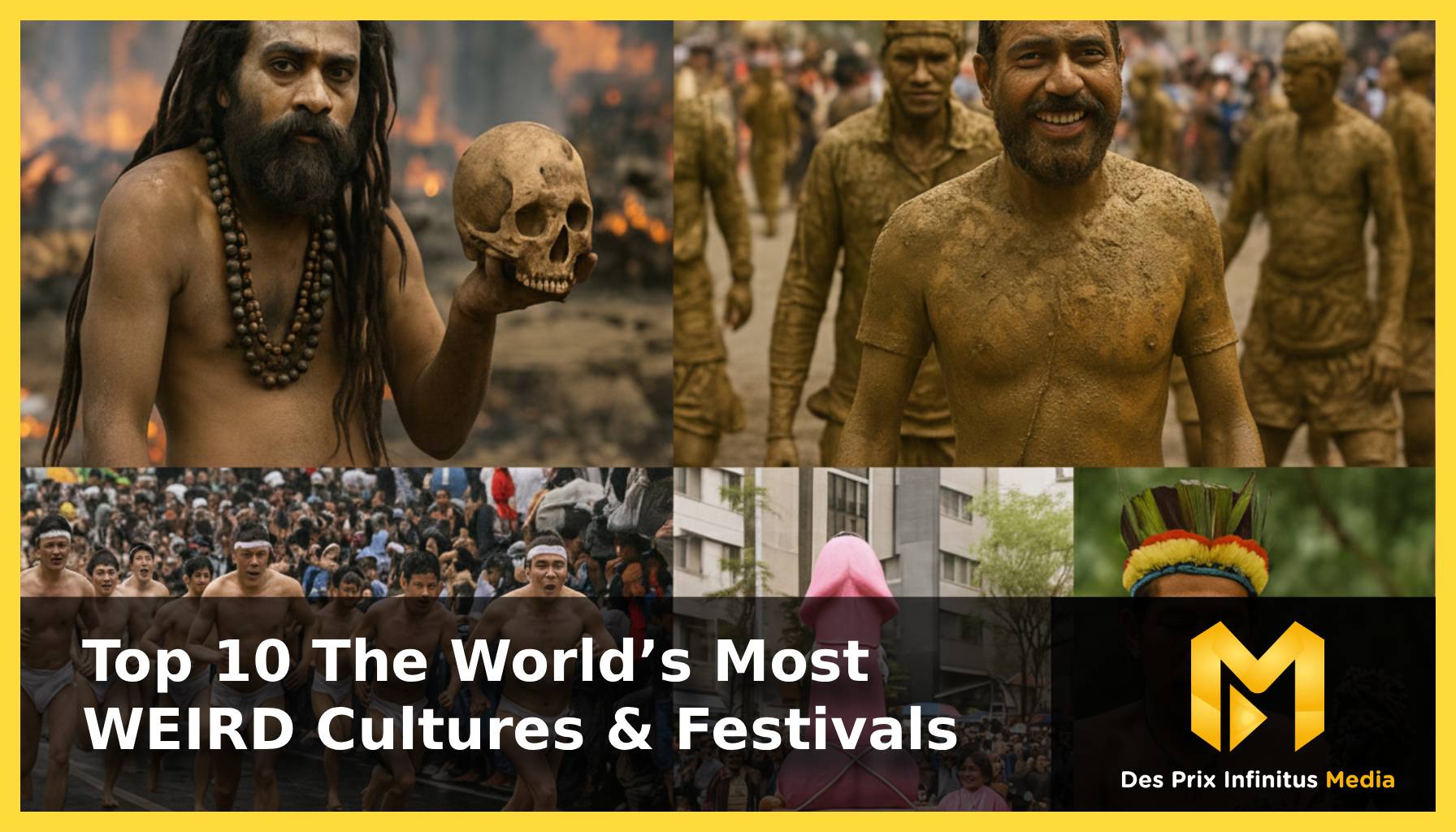
Think you’ve seen it all? Think again. Roll in cow dung, wrestle naked, or drink blood, no, this isn’t a dare gone wrong. It’s culture. The world’s weirdest festivals are living proof that when it comes to rituals, humans don’t do subtle. Some are shocking, some are hilarious, and all of them are unforgettable. These ten festivals are proof that weirdness knows no borders, and sometimes, neither does common sense.
Get ready to travel the globe, without leaving your seat and peek into the weirdest, wildest, and most WTF-worthy cultural festivals humanity has to offer. Warning: some of these are not for the faint of heart… or the weak of stomach.
Bizarre Traditions That Define Cultural Identity
Cultural identity is often shaped by the most unusual and bizarre traditions celebrated by communities. These offbeat traditions showcase the rich diversity of human cultural expression. They also serve as a vital link to the past, preserving cultural heritage for future generations.
The Anthropology of Strange Celebrations
The anthropology behind these bizarre celebrations reveals their roots in ancient rituals and practices. By studying these global cultural events, anthropologists gain insights into the historical and social contexts. For example, some festivals may have started as agricultural rituals or rites of passage, evolving into the unique celebrations we see today.
Unusual festivals are key to preserving cultural heritage. They keep alive a community’s customs, stories, and values. Through music, dance, and ritualistic practices, these events transmit cultural knowledge from one generation to the next. By participating in these bizarre celebrations, community members reinforce their cultural identity and ensure the continuation of their heritage. Brace yourself! Discover the Top 10 WEIRD Cultural Festivals from around the world:
1. Cow Dung Bathing Festival: India’s Messiest Celebration

India’s cultural calendar is filled with unusual customs, and the Cow Dung Bathing Festival stands out. Known as Gorehabba, it involves bathing in cow dung, a tradition deeply rooted in Hinduism.
The Sacred Nature of Bovine Waste in Hinduism
In Hinduism, cows are considered sacred, and their products, including dung, are believed to purify. Cow dung is used in rituals, thought to cleanse the body and soul of impurities.
How the Goitha Snan Festival Unfolds
At the Gorehabba festival, devotees gather to mix cow dung with water, creating a paste. They then apply this paste to their bodies, sometimes fully immersing themselves. The festival attracts both locals and tourists, intrigued by its unique customs.
Purported Health Benefits and Scientific Scepticism
Festival supporters claim cow dung baths offer health benefits, such as anti-inflammatory effects and skin purification. Yet, scientific doubts exist regarding its hygiene and safety. Despite this, the festival is a significant cultural event, showing the blend of tradition and modernity.
2. Naked Ambitions: Japan’s Hadaka Matsuri

The Hadaka Matsuri is Japan’s most eccentric festival. They highlight the country’s rich cultural diversity. These events attract visitors worldwide, eager to experience something unique.
Hadaka Matsuri: Thousands of Nearly-Naked Men Scrambling for Luck
The Hadaka Matsuri, or “Naked Man Festival,” is a centuries-old tradition. Thousands of nearly-naked men compete for sacred objects, believed to bring good luck. It showcases Japan’s rich cultural heritage and modern-day excitement.
The Ritual Process and Religious Significance
Participants compete for sacred talismans, believed to grant the winner good fortune. The ritual is deeply rooted in Shinto beliefs, focusing on purification and spiritual cleansing.
International Reactions and Tourism Impact
The Hadaka Matsuri has gained international attention, drawing tourists. Some are fascinated by its raw energy, while others are intrigued by its cultural and historical significance.
3. Yulin Dog Meat Festival: China’s Controversial Tradition

The Yulin Dog Meat Festival, held annually in Yulin, China, has sparked global debate over its consumption of dog meat. This event is among the most contentious cultural events, attracting widespread criticism from animal welfare groups worldwide.
Historical Context and Cultural Significance
The festival’s origins trace back to 2009, aiming to revive an old custom. Supporters view it as a cultural heritage, while detractors label it as unnecessary cruelty.
Global Outcry and Changing Attitudes
The global backlash against the festival has significantly altered public opinion, both within China and globally. Campaigns to abolish the festival have collected millions of signatures, and there’s been a notable decrease in dog consumption.
4. Blood Drinking Rituals of Nepal and Tibet

In Nepal and Tibet, certain communities engage in blood drinking rituals as part of their spiritual practices. These practices are deeply rooted in local culture and are believed to hold spiritual significance.
Ceremonial Practices and Spiritual Beliefs
These rituals aim to connect practitioners with their spiritual entities, often performed during specific ceremonies. The belief is that consuming blood grants participants certain qualities or spiritual powers.
Modern Adaptations and Health Concerns
As awareness of health risks from blood consumption grows, such as disease transmission, modern adaptations of these rituals are being explored. There’s a pressing need to reconcile cultural preservation with public health concerns.
5. Aghori Sadhus (India): The World’s Most Extreme Spiritual Sect

If any human community truly defines the word “extreme,” it is the Aghori Sadhus of India, a tiny, secretive ascetic sect mainly found around the cremation grounds of Varanasi, the holiest and most confronting city in Hindu belief.
To outsiders, they seem disturbing, even terrifying. To themselves, they are seekers of absolute enlightenment through the total rejection of societal rules.
Who are the AGHORIS?
Aghoris are devotees of Lord Shiva, particularly in his fiercest form, Bhairava, the destroyer of illusion. Unlike mainstream Hindu monks who pursue purity and discipline, Aghoris believe: There is no purity or impurity. Only illusion and liberation come from destroying it.
To achieve spiritual freedom (moksha), they deliberately embrace what society rejects: death, decay, filth, and fear.
What makes them so shocking?
- Live in Cremation Grounds: Aghoris meditate among burning funeral pyres along the Ganges River, believing constant exposure to death removes fear of mortality.
- Human Skulls & Ash Rituals: They often use human skulls as bowls, sit or eat atop burial remains and smear cremation ash on their bodies (a symbol of life’s impermanence).
- Ritual Cannibalism: Some extreme Aghoris have been known to consume flesh taken from corpses washed downstream, seen not as hunger but as the ultimate test against cultural taboos.
While their practices disturb modern moral sensibilities, Aghoris represent an ancient philosophical question: What if liberation means not choosing between light and dark but accepting both as one? They live at the intersection between: Fear and faith, Death and devotion & Disgust and discipline. Their existence challenges society’s strict definitions of what is acceptable spirituality and forces us to confront our own discomfort with mortality.
6. Famadihana: Madagascar’s Dancing with the Dead

In Madagascar’s heart, a unique cultural festival takes place. It’s where the living reconnect with their ancestors. Famadihana, a tradition deeply rooted in Madagascan culture, celebrates the deceased. It involves exhuming, rewrapping, and dancing with their remains.
The Process of Exhuming and Rewrapping Ancestors
During Famadihana, families come together. They exhume their ancestors’ remains, rewrap them in new cloth, and dance to traditional music with the corpses. This ritual, happening every seven to ten years, shows deep love and respect for their forebears. The process is filled with elaborate ceremonies, treating the deceased with dignity and affection.
Spiritual Beliefs Behind “The Turning of the Bones”
The spiritual beliefs of Famadihana focus on maintaining a connection between the living and the dead. By rewrapping their ancestors, families ensure they remain part of their lives, seeking blessings and guidance. This “turning of the bones” shows a profound respect for heritage and ancestry.
Plague Concerns and the Future of the Tradition
Famadihana faces challenges, including concerns about the plague, a disease linked to handling corpses. Efforts are being made to balance tradition with public health concerns. This ensures the festival’s continuation while protecting community health.
7. Karni Mata: Where Thousands of Rats Are Worshipped as Sacred

In the heart of Rajasthan, India, a temple dedicated to Karni Mata stands out. Here, rats are worshipped fervently, a custom deeply rooted in local culture. It showcases the community’s traditions and eccentric festivities.
The Legend Behind India’s Rat Temple
The Karni Mata temple, in Deshnoke, is a major pilgrimage site. It’s said that Karni Mata, a 14th-century mystic, had spiritual powers. She brought a young boy back to life, seen as a miracle, making her an incarnation of Durga.
Over time, the temple became linked with rats. These are believed to be the reincarnations of her followers.
Daily Life Among 20,000 Holy Rodents
The temple is home to about 20,000 rats, roaming freely. Devotees see these rats as sacred, bringing good fortune. They are fed milk, sweets, and grains, and treated with reverence.
Visitors can see the rats and even feed them. This creates a unique and captivating scene.
The White Rat Blessing and Devotee Practices
A white rat is seen as the most sacred among them. Sightings of a white rat are believed to be auspicious. Devotees seek blessings from these rare rodents.
Visitors participate in rituals, including prayers and food offerings to the rats. This bizarre celebration reflects the community’s strong faith and cultural heritage.
The Karni Mata temple showcases how unusual customs can define a community’s identity. Its unique practices and the reverence for rats make it a captivating destination for those interested in diverse and eccentric festivities worldwide.
8. Amazonian Bullet Ant Glove Ritual: Pain as a Path to Manhood

In Amazon, the Sateré-Mawé people uphold a tradition that is both captivating and harsh. The Bullet Ant Glove Ritual is a rite of passage, marking the shift from boyhood to manhood. It tests the endurance and bravery of young men.
Initiation Ceremony
The Sateré-Mawé tribe’s initiation involves wearing a glove filled with bullet ants. These ants are renowned for their excruciating sting. The ritual transcends mere pain endurance; it symbolises strength, resilience, and manhood.
The World’s Most Painful Insect Sting
Bullet ants hold the record for the most painful sting, according to the Schmidt Pain Index. Their sting is a sharp, burning sensation that can render the victim immobile for a while. The ants are sewn into a glove, and as they sting, the young men prove their capacity to withstand extreme pain.
Psychological and Cultural Significance
The Bullet Ant Glove Ritual is deeply ingrained in the Sateré-Mawé culture. It serves as a test of manhood, preparing young men for adulthood’s trials. The ritual also strengthens the tribe’s cultural identity and fosters community unity.
This practice, though extreme, is a cornerstone of the Sateré-Mawé heritage. It highlights the complex interplay between pain, culture, and identity. As global connections grow, such unique traditions offer a window into the varied human definitions of courage and manhood.
9. Kanamara Matsuri (Penis Festival): The Festival of the Steel Phallus

The Kanamara Matsuri celebrates fertility and the phallus, featuring giant phallic symbols. It has evolved from protecting sex workers to a broader celebration of fertility and sexual health.
From Protecting Sex Workers to Celebrating Fertility
Originally, the Kanamara Matsuri protected sex workers from sexually transmitted diseases. It has transformed into a festival celebrating fertility, sexual health, and the phallus, incorporating Shinto rituals.
Modern Celebrations and LGBTQ+ Inclusivity
Today, the Kanamara Matsuri is known for its inclusive atmosphere. It embraces diversity and promotes sexual freedom and acceptance. The festival is significant for the LGBTQ+ community, celebrating love and sexuality in all forms.
10. Lip Plate Ritual: Ethiopia (Mursi Tribe)

Among the world’s most visually striking cultural traditions is the lip-plate ritual of the Mursi people, an indigenous tribe living in Ethiopia’s Omo Valley. Often misunderstood as something “bizarre” or “extreme,” this ancient practice is actually deeply rooted in identity, beauty, strength, and social status.
Who are the Mursi?
The Mursi are semi-nomadic pastoralists who rely on cattle herding and farming for survival. Their customs remain largely unchanged for centuries, and they guard their traditions proudly despite growing outside influence.
The lip-plate ritual belongs specifically to young women, marking a powerful rite of passage into womanhood.
How the Ritual Works
The process is gradual and symbolic: At puberty, the girl’s lower lip is pierced with a small wooden peg. Over months or years, the peg is replaced with larger discs to slowly stretch the lip. Eventually, a clay or wooden plate — sometimes 10–20 cm wide — can be worn. The stretching is done carefully to avoid tearing, allowing the lip to adapt naturally over time.
What is Symbolises
Contrary to sensational portrayals, lip plates are not worn to shock or deform — they express beauty and pride within Mursi culture.
- Sign of Beauty: A larger lip plate is traditionally viewed as more attractive and elegant.
- Symbol of Maturity: Wearing a plate shows a woman is socially recognised as an adult.
- Indicator of Marriage Value: Historically, plate size influenced the number of cattle given as bride-wealth, representing a woman’s status and strength.
- Cultural Identity: Lip plates distinguish the Mursi from surrounding tribes — it is a bold declaration of tradition in a rapidly modernising world.
The Mursi lip-plate ritual reveals something powerful about humanity. Every culture shapes the body to express identity and belonging. And what looks extreme from afar often feels normal within the community. Cultural traditions survive not because they make logical sense but because they create meaning.
Conclusion: What These Cultural Oddities Reveal About Human Society

If these festivals teach us anything, it’s that humans are equal parts curious, creative, and completely fearless when it comes to celebrating life, faith, and community. These bizarre traditions show that what outsiders call “weird” is often a profound expression of identity, belief, and belonging.
They remind us that culture isn’t just rules and rituals, it’s spectacle, risk, and imagination rolled into one. In a world that often celebrates conformity, these oddities are proof that humans will always find ways to surprise, shock, and delight, sometimes at the expense of comfort, common sense, or squeamish stomachs.
Ultimately, these festivals aren’t just strange; they’re a celebration of what makes humanity endlessly fascinating, unpredictable, and wonderfully weird.