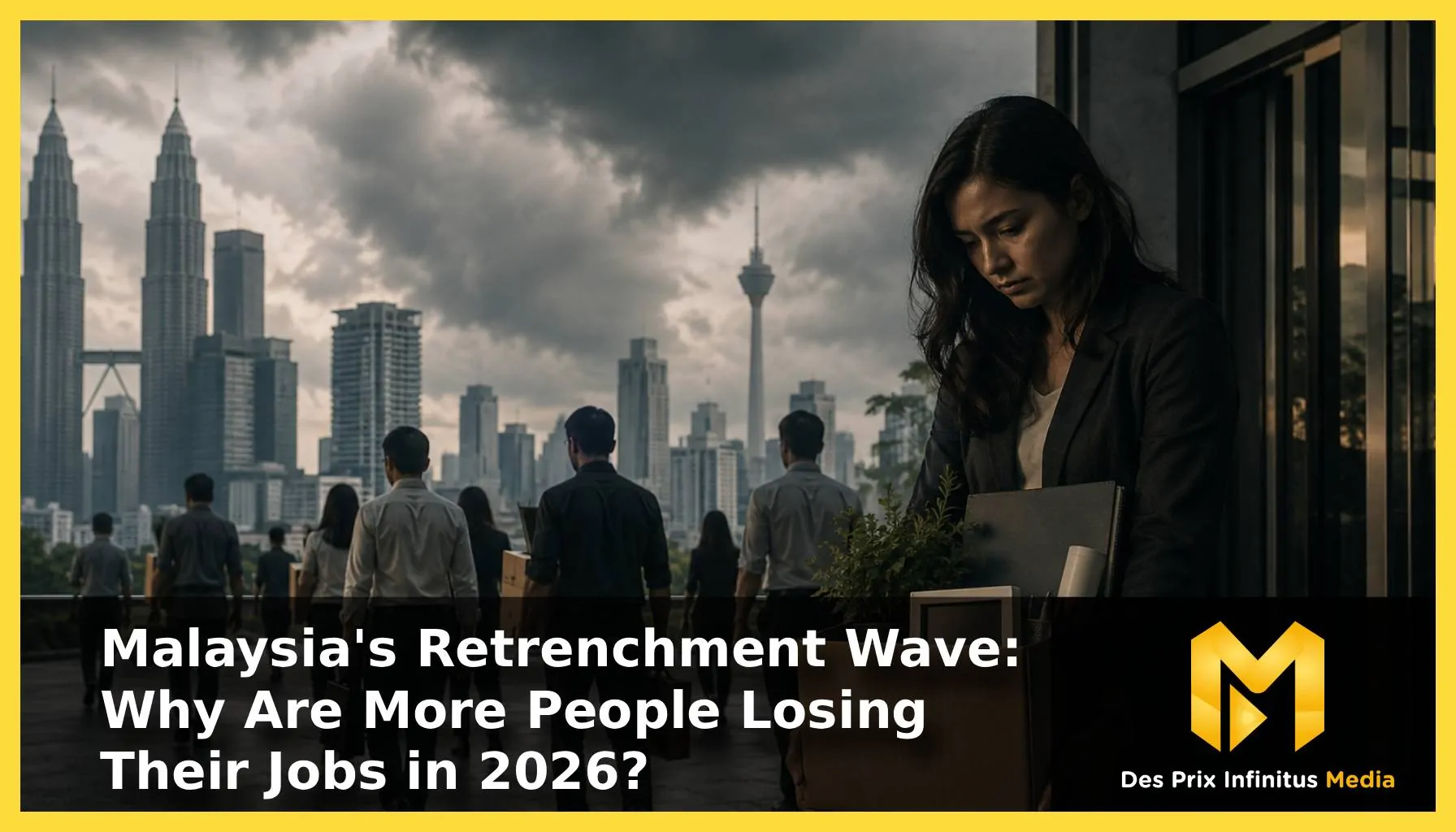
For many Malaysians, 2026 was supposed to be a year of economic recovery. Instead, thousands are finding themselves unexpectedly out of work.
According to the latest data from PERKESO’s Employment Insurance System (EIS), 52,607 workers had already applied for Unemployment Benefits as of 16 July 2026. That figure is already about 70% of the total applications recorded throughout 2025, raising concerns that this year could become Malaysia’s worst period of retrenchment since the COVID-19 pandemic.
So, what’s really happening?
It’s Not Just One Industry
Unlike the pandemic, where lockdowns triggered sudden job losses, today’s retrenchments are happening across multiple sectors.
Manufacturing, retail, logistics, support services and several other industries have been among the hardest hit as companies struggle with rising operating costs, softer consumer demand and global economic uncertainty. Many businesses are choosing to downsize, while others have closed their doors entirely.
The Ministry of Human Resources has also stated that business closures and workforce downsizing remain the biggest drivers of job losses, rather than automation or artificial intelligence.
Why Are Businesses Downsizing?
Behind every retrenchment is often a difficult business decision.
Companies today face increasing pressure from higher operating expenses, rental costs, inflation, changing consumer spending habits and global trade uncertainties. When profits shrink, employers may freeze hiring, restructure departments or reduce headcount to stay financially afloat.
For some businesses, downsizing is viewed as a way to survive rather than shut down completely. Unfortunately, employees often bear the biggest impact.
The Human Cost Goes Beyond Losing a Paycheque
Losing a job doesn’t only affect someone’s income.
It can disrupt career plans, delay financial goals, increase stress and affect mental well-being. For young professionals, it may mean postponing buying a home or starting a family. For parents, it creates uncertainty over providing for their household.
That’s why retrenchment is often more than just an economic issue, it becomes a personal one.
What Support Is Available?
The good news is that affected workers aren’t entirely on their own.
Eligible employees who lose their jobs may apply for assistance under PERKESO’s Employment Insurance System (EIS), which provides temporary financial support through the Job Search Allowance, career counselling, job-matching services and reskilling programmes to help individuals return to work more quickly.
The government has also continued strengthening platforms such as MYFutureJobs, connecting job seekers with employers while expanding upskilling and retraining initiatives.
A Wake-Up Call for the Workforce

The rising number of retrenchments serves as a reminder that today’s job market is changing faster than ever. While no one can completely control economic conditions, workers can improve their resilience by continuously learning new skills, staying adaptable and building professional networks.
For employers, it also highlights the importance of balancing business sustainability with responsible workforce management. Economic challenges may come and go, but one thing remains clear: in today’s rapidly evolving workplace, adaptability has become one of the most valuable career skills anyone can have.