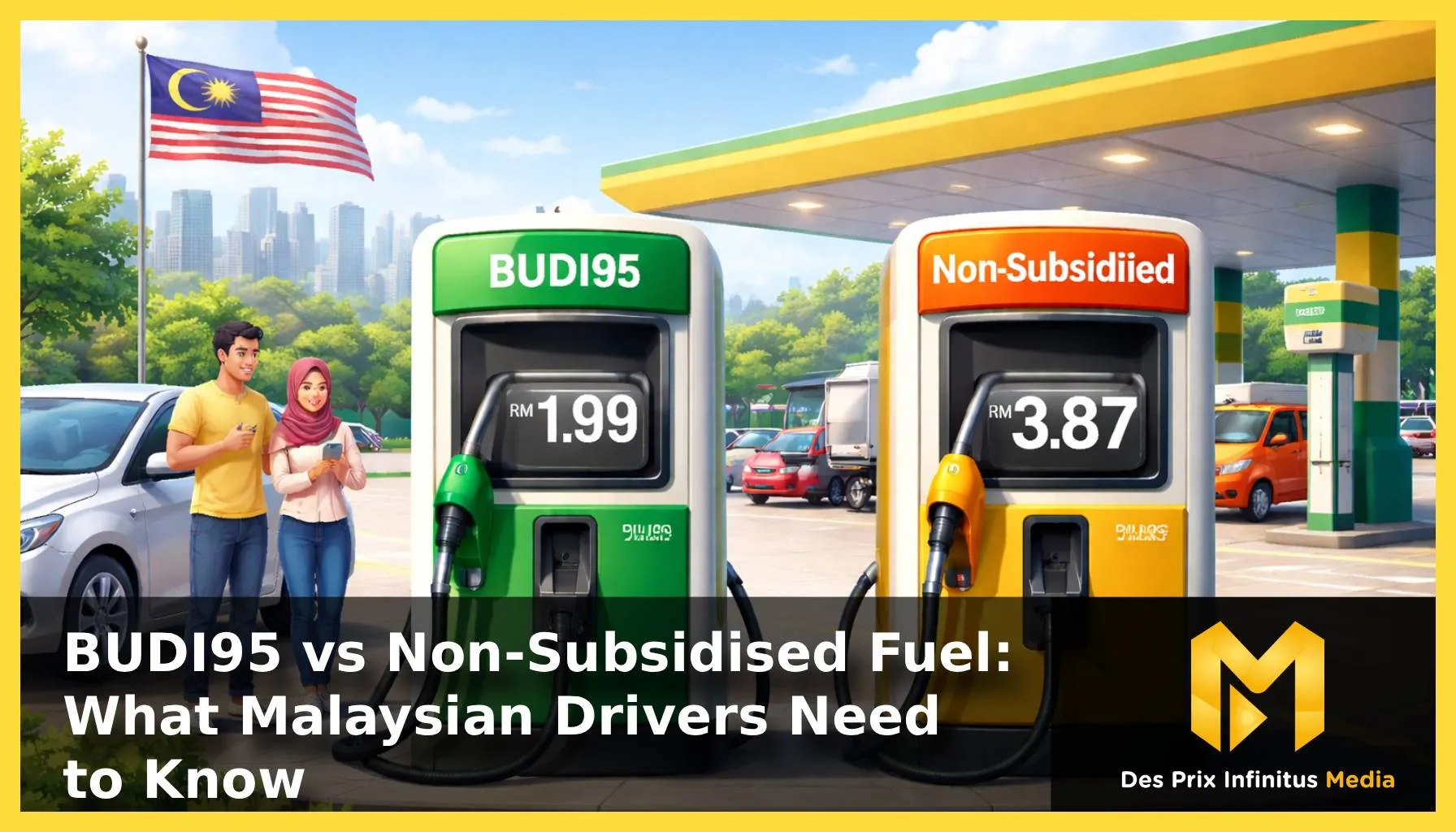
Malaysia’s fuel subsidy system has changed significantly with the introduction of BUDI95, a targeted subsidy programme designed to protect citizens from rising fuel costs while reducing government spending on blanket subsidies. Understanding the difference between BUDI95 fuel and non-subsidised fuel prices is now essential for every driver in Malaysia.
Here’s a simple breakdown of how it works and what it means for motorists.
What Is BUDI95?
BUDI95 is a targeted fuel subsidy scheme introduced by the Malaysian government under the BUDI MADANI initiative. The programme allows eligible Malaysians to purchase RON95 petrol at a subsidised price of RM1.99 per litre.
The subsidy is designed to reduce the cost of living while ensuring that government aid reaches the people who actually need it.
However, beginning April 2026, the government has reduced the monthly quota from 300 litres to 200 litres per driver.
Key features of BUDI95 include:
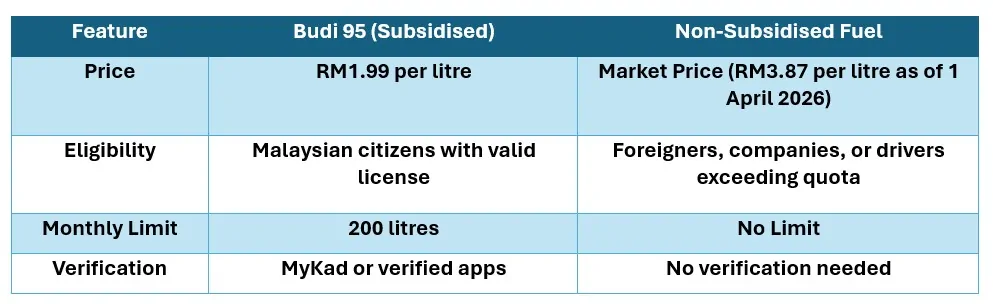
- Subsidised RON95 price: RM1.99 per litre
- Monthly limit of 200 litres per driver
- Available to Malaysian citizens with a valid MyKad and driving licence
- Verification is done using MyKad at the petrol station or through supported payment apps
The reduced quota aims to ensure the subsidy benefits everyday drivers while limiting excessive fuel consumption.
What Happens After 200 Litres?
Once a driver exceeds the 200-litre monthly limit, the fuel price will automatically switch to the non-subsidised market price.
This price reflects global oil market conditions and is usually higher than the subsidised rate.
What Is Non-Subsidised Fuel?
Non-subsidised fuel refers to petrol sold at market price without government support.
This applies mainly to:
- Foreign citizens
- Foreign-registered vehicles
- Companies and commercial entities
- Drivers who exceed their 300-litre monthly BUDI95 quota
When the subsidy does not apply, motorists pay the actual market fuel price, which fluctuates based on global oil prices.
Key Differences: BUDI95 vs Non-Subsidised Fuel
Why Malaysia Introduced BUDI95
Previously, Malaysia used a blanket fuel subsidy system, meaning everyone — including foreigners and smugglers — benefited from the cheaper fuel.
The government introduced BUDI95 to:
- Reduce subsidy leakages
- Ensure Malaysians benefit directly
- Lower government spending on fuel subsidies
- Strengthen national finances
By targeting subsidies more precisely, the government hopes to save billions of ringgit while still protecting ordinary drivers from volatile global oil prices
What Malaysian Drivers Should Know
For most drivers, 200 litres is still enough for daily commuting, especially for city driving.
However, motorists should:
- Monitor monthly fuel usage
- Plan fuel consumption carefully
- Be prepared to pay the market price after exceeding the quota