

Key Takeaways:
- Free education can drive Malaysia’s economic growth by developing a skilled workforce and reducing unemployment.
- Accessible education promotes equality, empowering those from low-income backgrounds and supporting social justice.
- Prime Minister Anwar Ibrahim envisions inclusive education that balances essential skills with cultural values for a stronger society.
Education is the cornerstone of a nation’s development and prosperity. In Malaysia, a country renowned for its cultural diversity and rapid economic growth, ensuring that education is accessible to all citizens is not just a moral imperative but a strategic necessity. Free education could be the transformative solution that not only uplifts individuals but also propels the nation toward sustainable development and inclusive growth.
The Current Landscape

In Malaysia, education is compulsory for children aged 6 to 15 years, yet the cost of tertiary education remains a significant barrier for many families. According to the Malaysia Education Blueprint 2013-2025, while the government covers a major portion of public university fees, students still face substantial costs in terms of accommodation, books, and living expenses. This financial burden is particularly heavy for families from low-income backgrounds, potentially depriving talented students of the opportunity to further their education.
The Economic Argument for Free Education
They say “you reap what you sow,” and in the case of free education, the harvest is a thriving economy. Education has long been the bedrock of personal and societal growth. According to a World Bank study, every additional year of schooling can boost a person’s income by 10% on average. In the context of Malaysia, where the government aims to transition to a high-income economy, free education can play a pivotal role in creating a skilled workforce that attracts foreign investment and drives innovation.
Moreover, higher education levels are directly linked to lower unemployment rates. Statistics from the Ministry of Higher Education in Malaysia indicate that graduates have a significantly lower unemployment rate compared to those with only secondary education. By removing financial barriers to education, Malaysia could reduce unemployment and increase productivity, resulting in a stronger economy.
Learning from Global Examples

Countries like Germany, Finland, and Norway have successfully implemented free education systems, reaping the benefits of a well-educated population. In Germany, for instance, public universities charge no tuition fees, allowing students from all walks of life to pursue higher education without the burden of debt. These countries have set a precedent, showing that when education is free, societies are more equal, cohesive, and prosperous.
Social Justice and Equality

Education is a powerful equaliser. It empowers individuals, particularly those from disadvantaged backgrounds, to break the cycle of poverty. In Malaysia, where income inequality remains a pressing issue, free education can bridge the gap between the rich and the poor, promoting social cohesion and harmony.
Furthermore, free education aligns with the United Nations Sustainable Development Goals, particularly Goal 4, which aims to ensure inclusive and equitable quality education for all. By adopting a policy of free education, Malaysia would demonstrate its commitment to global standards and human rights.
PM Anwar Ibrahim’s Vision
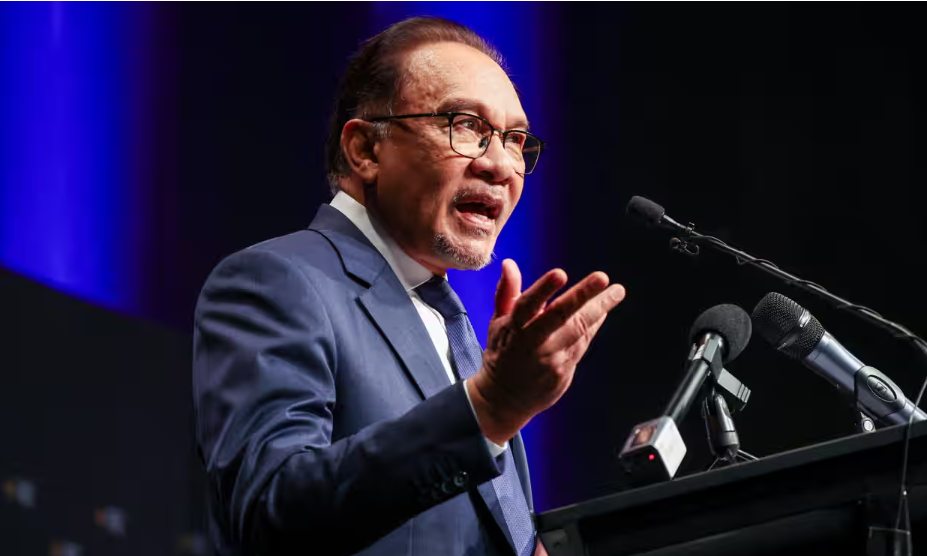
Prime Minister Anwar Ibrahim has long been an advocate for social justice and equitable access to opportunities. His vision for Malaysia is one where no child is left behind due to financial constraints. Anwar envisions a Malaysia where education serves as the foundation for a fair and prosperous society. Under his leadership, there is a renewed focus on policies that prioritise human capital development, recognising that the future of Malaysia hinges on the education and empowerment of its youth.
Datuk Seri Anwar Ibrahim has urged the Education Ministry to prioritise mastering Science, Mathematics, and English to drive national development. Highlighting the urgency due to emerging fields like AI, green energy, and digital technology, he emphasised that while students must strengthen their command of English for technological advancements, they should also uphold the Malay language. Additionally, he stressed the importance of integrating moral values, such as respect, in education.
Anwar’s vision includes not only making education free but also improving the quality of education to ensure that it meets global standards. By fostering an environment where every Malaysian has the right and access to education, Anwar aims to cultivate a generation capable of driving the nation forward in an increasingly competitive global landscape.
The Path Forward

Implementing free education in Malaysia requires strategic planning and investment. The government could explore various funding models, such as reallocating budgets, increasing taxes on luxury goods, or establishing public-private partnerships to support this initiative. Additionally, international organisations and NGOs could play a role in providing financial and technical assistance.
When all is said and done, success is about leaving no one behind. Making education free for everyone in Malaysia is not just an idealistic vision but a pragmatic strategy to foster economic growth, social justice, and national unity. By investing in education, Malaysia can unlock a brighter future where every citizen is empowered to contribute to the nation’s success. After all, “knowledge is power,” and with education as a right, not a privilege, Malaysia will be a nation that truly “leaves no stone unturned” in its quest for prosperity.