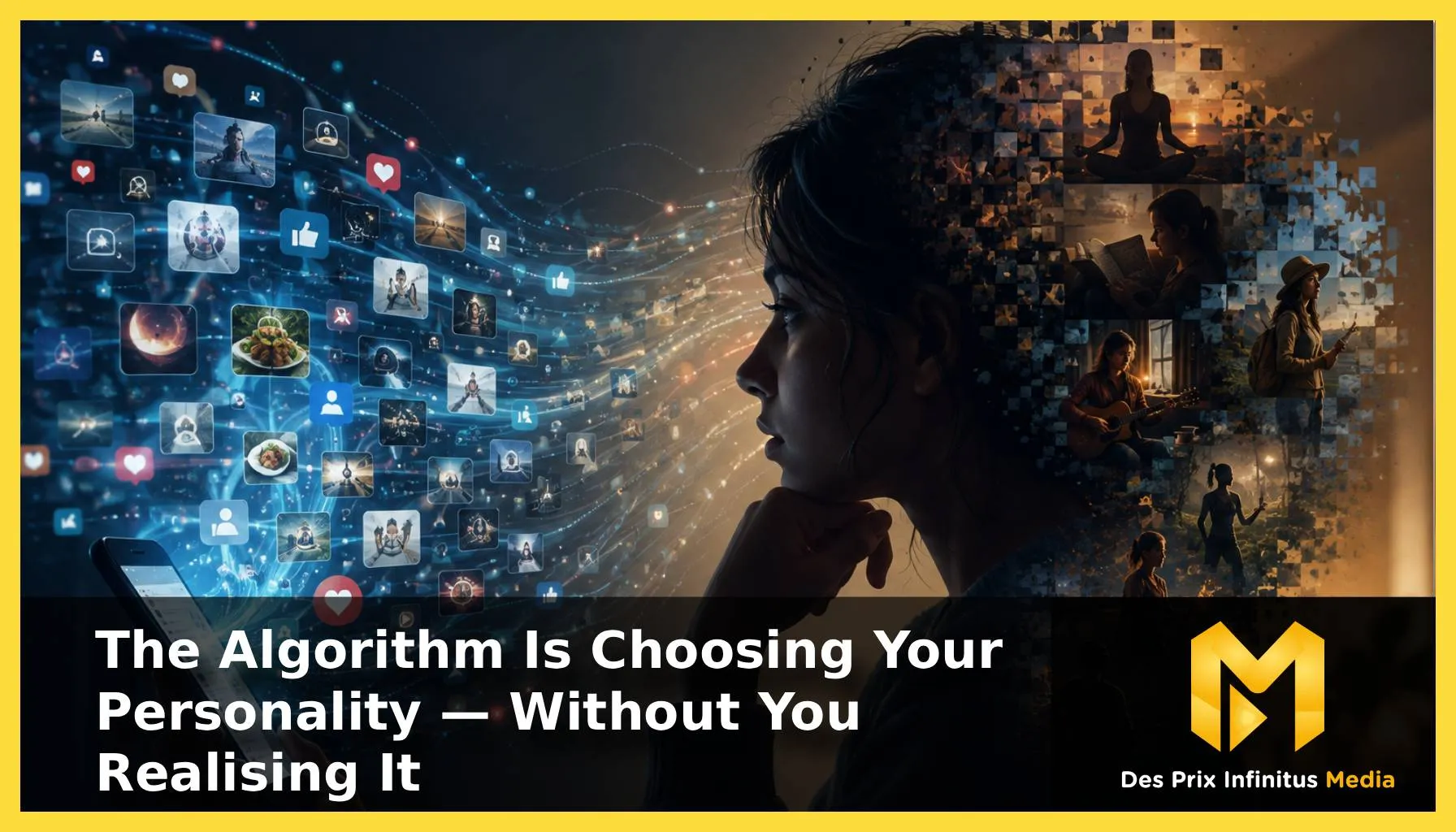
You probably think you’re choosing what to watch. And technically, you are.
But every pause, replay, like and scroll is also teaching the algorithm what catches your attention. Before long, your feed starts feeling oddly familiar, almost like it knows you.
The question is: does it really know you, or is it helping shape who you become?
Your Feed Knows More Than You Think
Every like, share, search, follow, replay and even the videos you watch until the very end can become a signal.
TikTok, for example, says its recommendation system considers interactions such as likes, shares, comments, follows, skips and watch time when deciding what to show next. YouTube similarly uses signals including watch history, searches, likes, dislikes, subscriptions and feedback.
The interesting part is that the algorithm isn’t simply discovering what you like. It is learning what keeps your attention. And once it finds something that works, it gives you more of it. That is where things get interesting.
From “I Like This” to “This Is Who I Am”
Just imagine you watch five videos about productivity.
The algorithm thinks: Interesting. This person likes productivity. So it sends you ten more. You watch them. Now it thinks: Definitely a productivity person. Soon your feed is full of morning routines, gym challenges, planners, motivational speeches and people waking up at 5 am for absolutely no reason.
Eventually, you might start thinking: “I’m really into productivity.” But where did that preference come from? Part of it came from you. Part of it came from the algorithm repeatedly putting the same idea in front of you.
Research on social-media personalisation has raised concerns that highly curated feeds can reduce exposure to diverse information and potentially affect users’ sense of autonomy and control. In other words, the algorithm can become a rather enthusiastic friend who keeps recommending the same thing until you eventually think you love it.
The Feedback Loop
This is the clever bit.
You influence the algorithm. Then the algorithm influences what you see. What you see influences what you interact with. And those interactions influence the algorithm again.
Round and round it goes.
You watch a few celebrity videos → you get more celebrity content → you spend more time watching it → the system learns that you are interested → it sends even more.
The cycle gets stronger.
TikTok itself explains that each new interaction helps refine its understanding of a user’s interests, while YouTube says its recommendations continually adapt as viewing habits change.
Your feed is therefore not a mirror. It is more like a mirror that keeps changing what it reflects.
Welcome to Your Personal Internet
This is why two people can open the same app and live in completely different versions of the internet.
One person sees football. Another sees skincare.
Someone else sees conspiracy theories. Another sees career advice.
Someone sees luxury holidays. Another sees “how to survive until payday”.
TikTok says there is no single For You feed; each person’s feed is tailored to their interactions and interests. The internet may be global. Your experience of it is surprisingly personal.
So, Are Algorithms Controlling You?
Not exactly.
The algorithm isn’t sitting in a dark room deciding who you will become. You still have choices. But the choices are being presented within an environment that has been carefully personalised around your previous behaviour. And that matters.
Because we tend to assume our interests are completely self-generated. Yet repeated exposure can make certain topics, lifestyles and opinions feel increasingly normal, familiar and relevant.
The danger isn’t necessarily that an algorithm tells you what to think. It is that it can quietly become very good at deciding what you think about.
Take Back a Little Control
The good news is you can actually confuse the algorithm.
Watch something completely outside your usual interests. Follow people with different perspectives. Search for topics instead of waiting for them to appear. Use “Not Interested” when something genuinely isn’t for you. YouTube and TikTok both provide ways for users to influence or manage their recommendations.
And occasionally, ask yourself a wonderfully uncomfortable question:
“Do I actually like this, or have I just been shown it 500 times?”
Because your algorithm may know your habits, it may know your obsessions. It may even have a pretty good guess about what will keep you scrolling. But it doesn’t have to decide who you become. You still get the final say.