
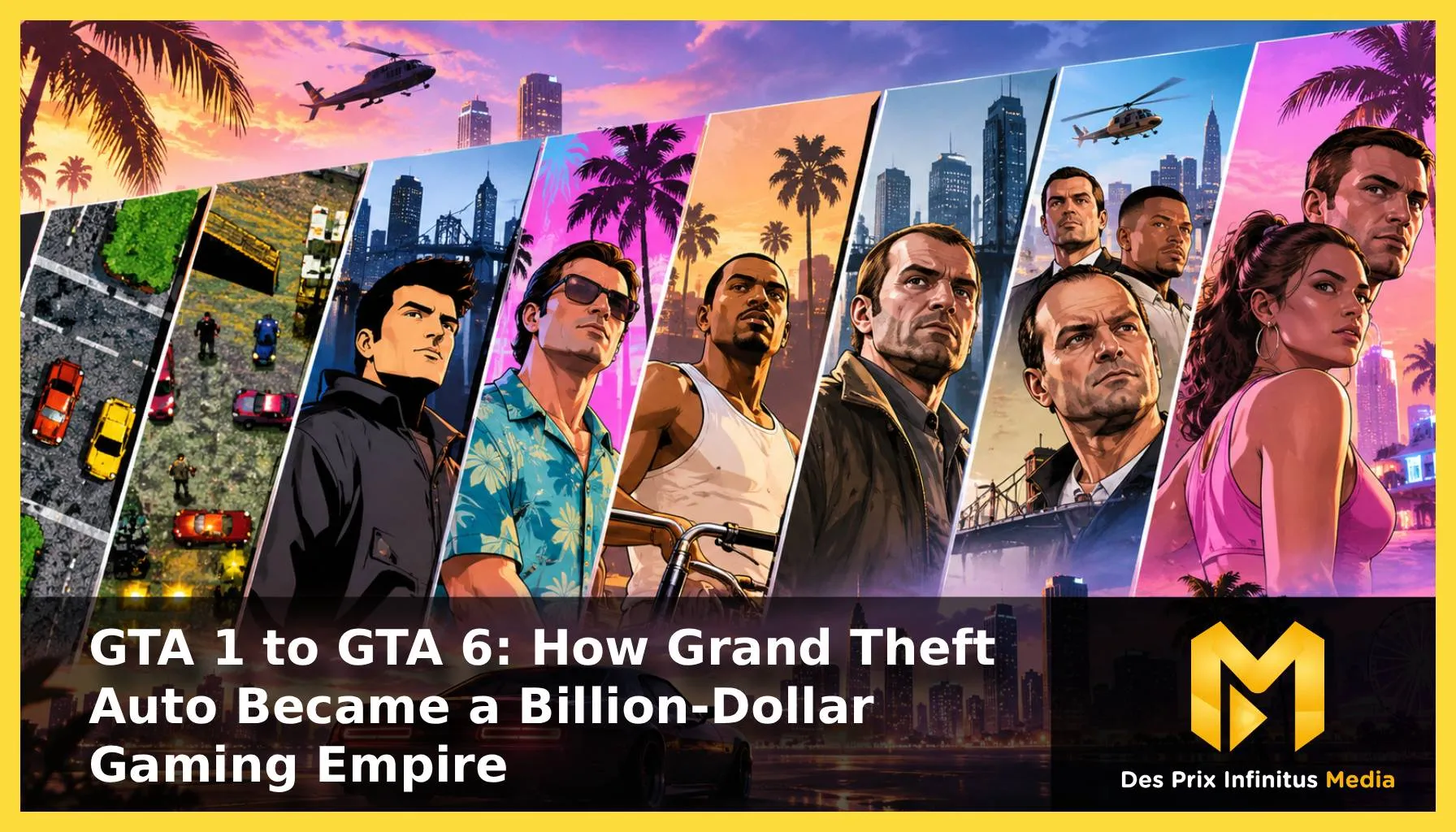
Few video game franchises have managed to keep generations glued to their screens quite like Grand Theft Auto (GTA). From stealing cars and outrunning police officers to building criminal empires and exploring sprawling digital cities, GTA has turned virtual chaos into a global entertainment phenomenon. With Grand Theft Auto VI (GTA VI) finally hitting the shelves on 19 November 2026, the excitement surrounding the franchise has reached another level. But how did it all begin?
From a Top-Down Game to an Open-World Revolution
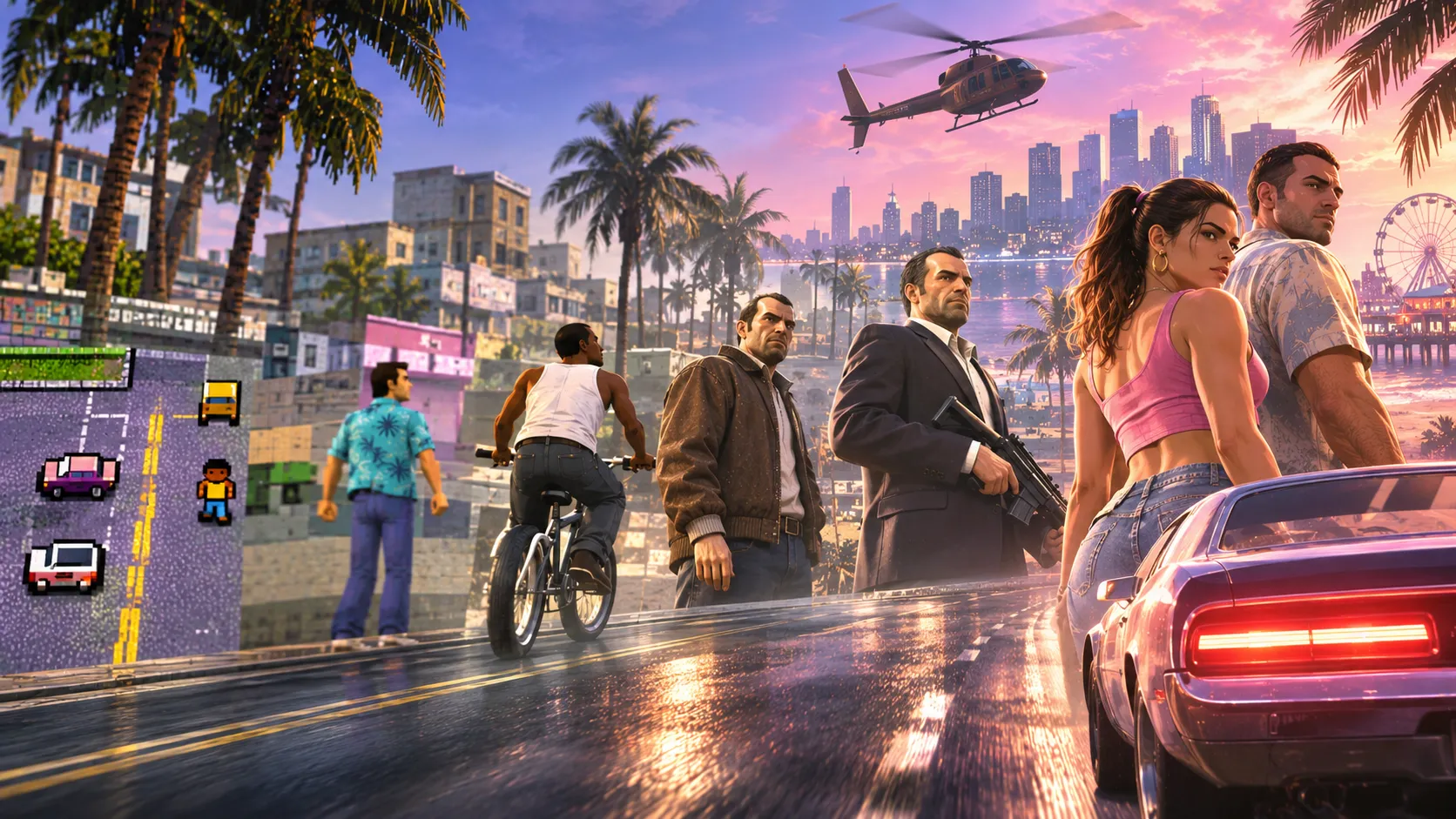
The GTA story began in 1997, when Scottish development studio DMA Design introduced the original Grand Theft Auto. Unlike today’s visually sophisticated titles, the game featured a simple top-down perspective, allowing players to navigate fictional cities, complete missions and cause a fair share of mayhem. Its unconventional concept quickly caught attention, establishing the foundations of a franchise that would eventually redefine gaming.
In 1999, GTA 2 expanded on the original formula with improved graphics, a futuristic setting and a gang-reputation system. However, it was the arrival of GTA III in 2001 that truly changed the game. Moving into a fully realised 3D environment, it introduced an immersive open world where players could explore Liberty City, interact with characters and experience a story beyond the main missions.
What followed was a remarkable evolution. GTA: Vice City (2002) transported players into a colourful, 1980s-inspired world filled with neon lights, memorable music and Miami-inspired streets. GTA: San Andreas (2004) expanded the experience further with a massive fictional state, multiple cities and greater freedom of exploration.
By the time GTA IV arrived in 2008, the franchise had embraced more realistic storytelling and sophisticated gameplay. Then came GTA V in 2013, introducing three playable protagonists, Michael, Franklin and Trevor, alongside the hugely popular GTA Online. More than a decade later, the franchise has entered its newest chapter with GTA VI, bringing players back to Vice City and introducing a new criminal duo, Jason and Lucia, in the fictional state of Leonida.
From its pixelated beginnings to its cinematic modern-day worlds, GTA has continually reinvented itself without losing its defining appeal.
The Business Behind the Mayhem
Behind the virtual car chases and outrageous missions lies an extraordinary business story. Rockstar Games, founded in 1998 by Sam Houser, his brother Dan Houser and their creative collaborators, helped transform GTA from an unconventional gaming concept into one of entertainment’s most recognisable intellectual properties. Today, Rockstar operates as a publishing label under Take-Two Interactive.
The commercial figures are just as impressive as the gameplay. According to Take-Two’s November 2026 announcement, the GTA franchise has sold nearly 480 million units worldwide, with GTA V alone accounting for almost 235 million. The fifth instalment also generated US$1 billion in retail sales within its first three days, setting a remarkable benchmark for entertainment launches.
The latest chapter has raised the bar even further. GTA VI recorded US$3.79 billion in day-one retail sales, according to Take-Two, making it the biggest entertainment launch in history. It also attracted 32.5 million pre-release unit sales, demonstrating the extraordinary anticipation surrounding its arrival.
The franchise’s commercial strength is not built on game sales alone. GTA Online has extended GTA V’s lifespan through regular content updates, virtual purchases, and an active player community. This long-term engagement model demonstrates how a successful entertainment property can continue generating value long after its initial release.
Why GTA Continues to Win Generations
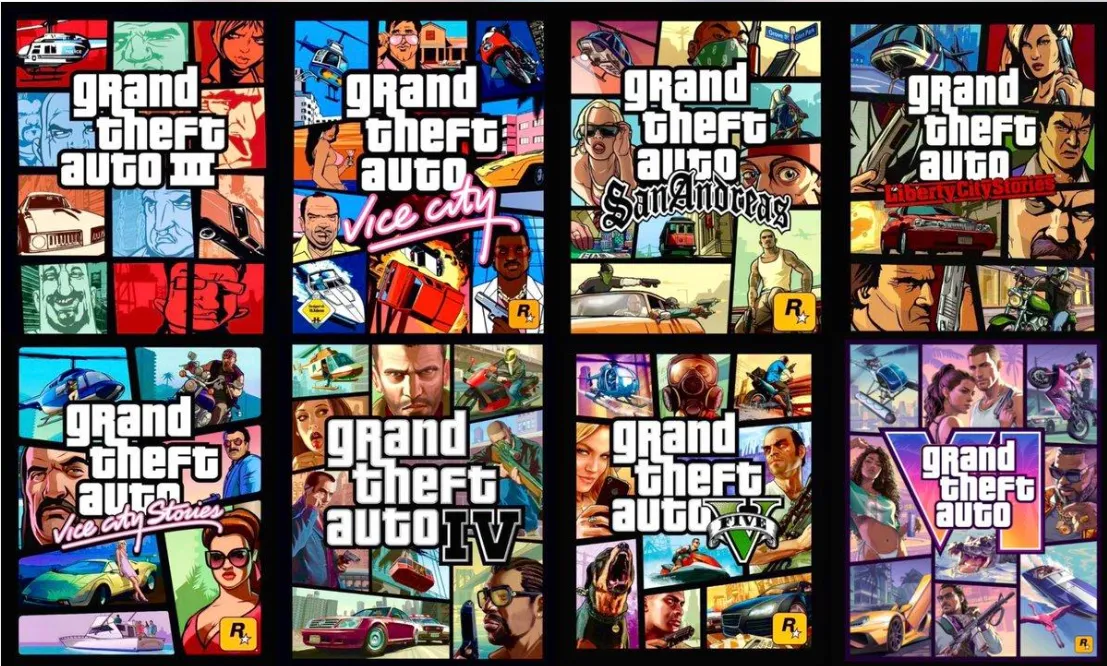
So, what makes GTA so difficult to put down?
Perhaps its greatest appeal lies in freedom. Players are not simply following a predetermined storyline; they can explore cities, customise vehicles, discover hidden activities, interact with characters and create their own unpredictable adventures. Its satirical take on modern society, memorable characters, radio soundtracks and cinematic storytelling have also helped establish a distinctive identity.
More importantly, Rockstar’s approach to creativity and brand management has kept the franchise relevant. Rather than flooding the market with annual releases, the company has focused on ambitious titles, detailed world-building and long-term player engagement. Its willingness to take creative risks, maintain high production standards and build anticipation between releases has become part of the brand’s identity.
Of course, GTA has never been without controversy, particularly over its depictions of violence and crime. Nevertheless, its cultural influence is undeniable.
Nearly three decades after its debut, GTA has become much more than a game about stealing cars. It is a lesson in creative reinvention, audience engagement and building a brand that stands the test of time. And if its latest chapter is anything to go by, Rockstar’s virtual world still has plenty of stories left to tell.
From a groundbreaking gaming concept to a billion-dollar global franchise, GTA demonstrates how visionary leadership, creative innovation and a distinctive brand identity can stand the test of time. Its evolution highlights the importance of challenging conventions, understanding audiences, and continuously delivering experiences that leave a lasting impression. The Leadership Excellence Awards (LEA) and Top Quality Brand Awards (TQBA) celebrate exceptional leaders and brands that redefine industries, inspire consumer confidence and set new benchmarks for excellence.
Nominate them today and let their achievements take centre stage.