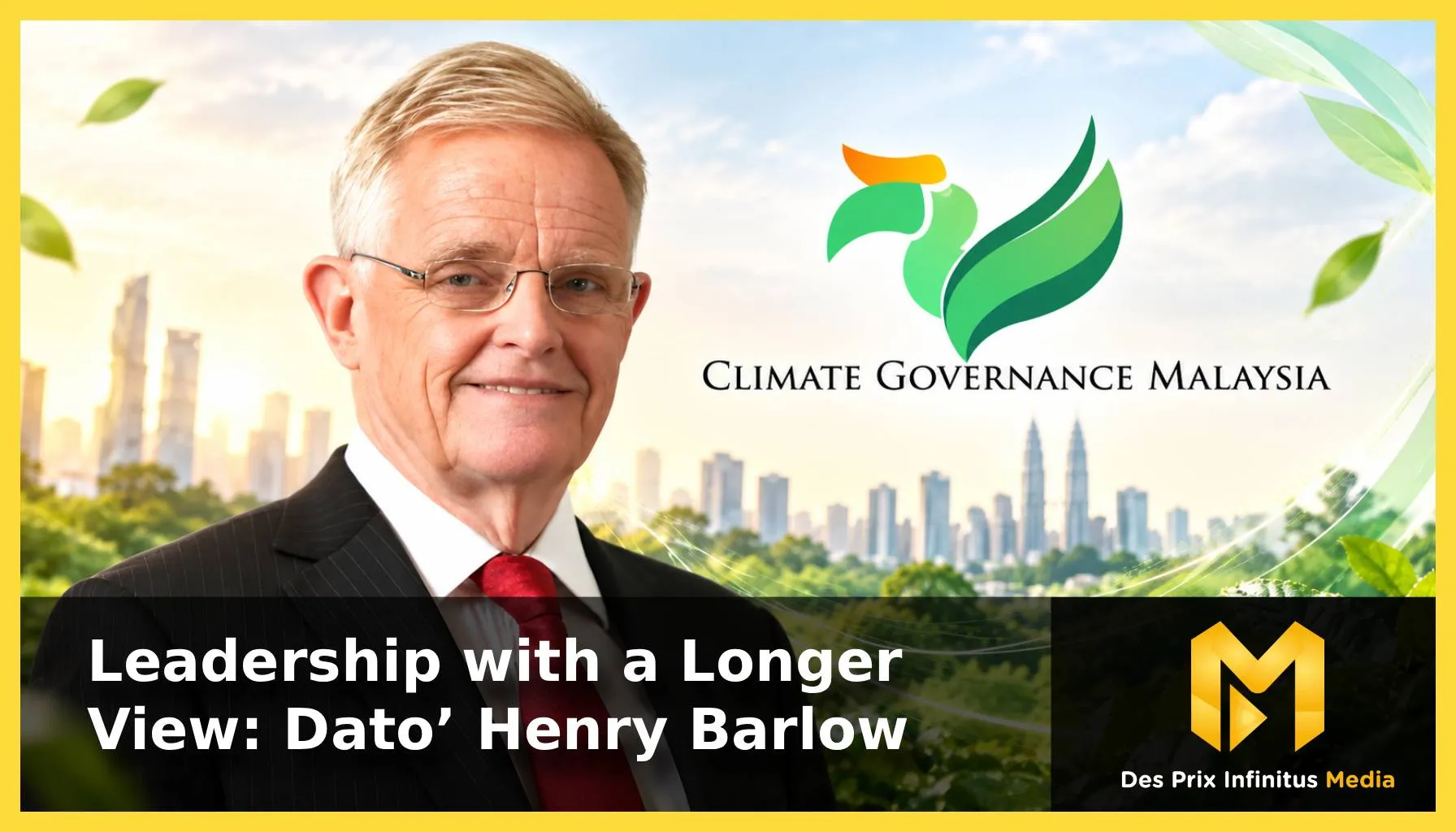
The most consequential business decisions extend beyond the balance sheet. They shape communities, resources and the environment. Dato’ Henry Barlow’s career reflects this broader view of corporate responsibility, where business, sustainability and governance increasingly intersect.
A British national who has made Malaysia his home, Dato’ Henry brings more than five decades of experience in the plantation industry to his role as Independent Non-Executive Director and Chair of the Board of Climate Governance Malaysia (CGM). Educated at Eton College and the University of Cambridge, he is also a Fellow of the Institute of Chartered Accountants in England and Wales. His career spans 30 years with the Guthrie group and Golden Hope, followed by his involvement with Sime Darby Berhad and its associated companies from 2007 to 2022. He also served as a director of HSBC Bank Malaysia and held leadership positions across the plantation and professional sectors.
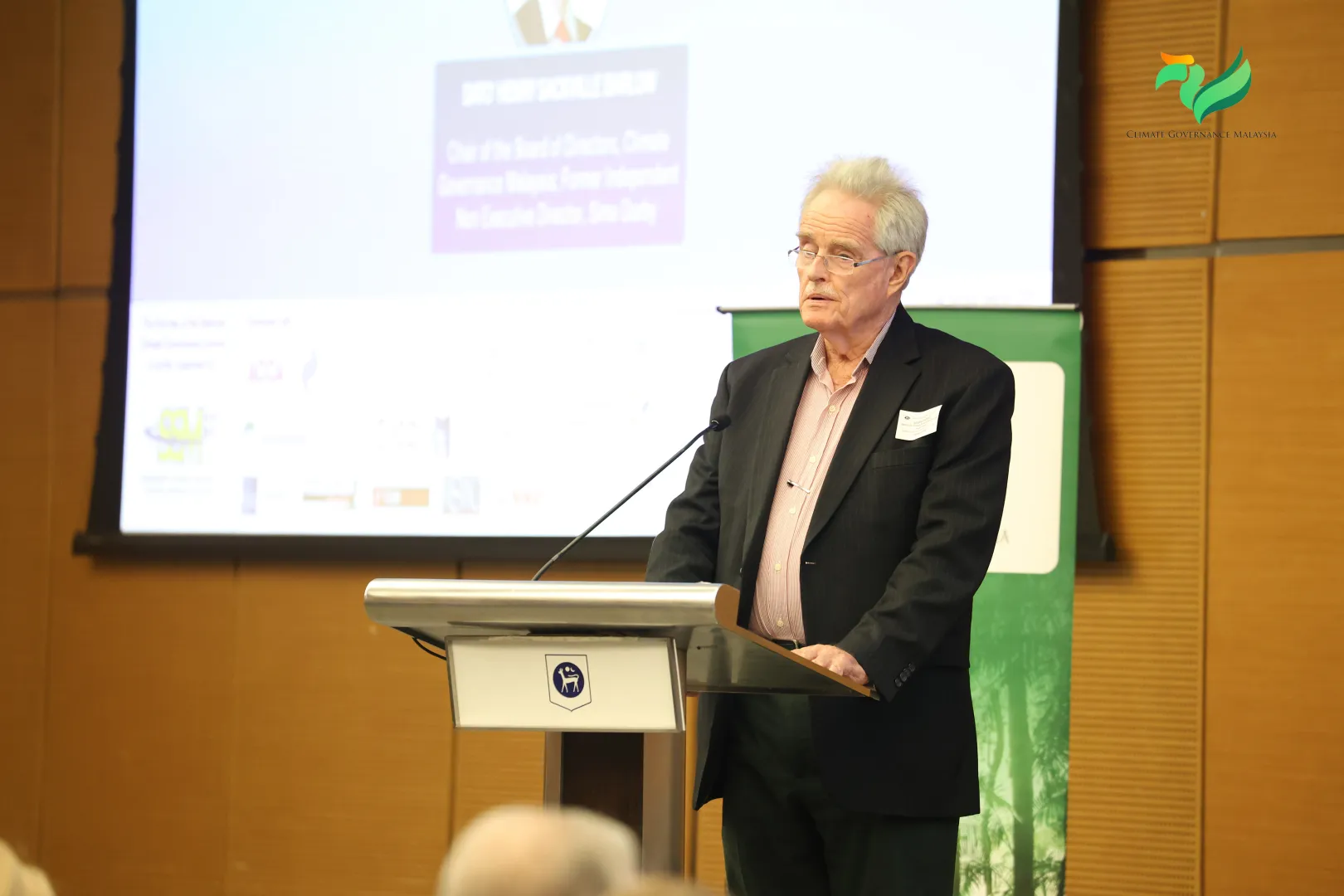
That experience provides a practical foundation for his work at CGM, where climate change is considered not solely as an environmental concern, but as a matter of governance, risk, resilience and corporate decision-making.
Launched in May 2019, Malaysia, through CGM, became the second country in the world and the first in Asia to establish a chapter of the World Economic Forum’s Climate Governance Initiative, now known as the Chapter Zero Alliance. Today, CGM is a network of non-executive directors and experts committed to strengthening board-level climate leadership, helping directors build the practical knowledge to guide companies through climate transition while safeguarding financial stability, resilience and sustainability. Its work also extends beyond directors, bringing together industry, government, academia and civil society through dialogues, events and knowledge-sharing initiatives.
The breadth of Dato’ Henry’s work, however, extends well beyond the corporate sphere. His longstanding involvement with the Roundtable on Sustainable Palm Oil (RSPO), where he currently serves as Joint Chair of the Grievance Committee and previously served as Joint Chairman of the Biodiversity Technical Committee, reflects his engagement with the practical challenges of making environmental considerations part of commercial activity.
His conservation work offers another dimension. A longstanding member of the Malaysian Nature Society, he served as its Honorary Treasurer. He has also developed an arboretum at Genting Sempah where he grows around 134 of the 160 known West Malaysian dipterocarp species. The collection reflects a form of conservation that depends on living stewardship, particularly for species whose seeds cannot simply be preserved through conventional methods of seed storage such as by deep freezing.
These experiences give his work at CGM a broader context. Climate governance increasingly intersects with capital allocation, regulation, operational resilience, supply chains, communities and the responsibilities businesses carry beyond their immediate financial interests. CGM’s programmes, director masterclasses, roundtables and conferences address these intersections across climate governance, sustainable finance, nature and resilience.
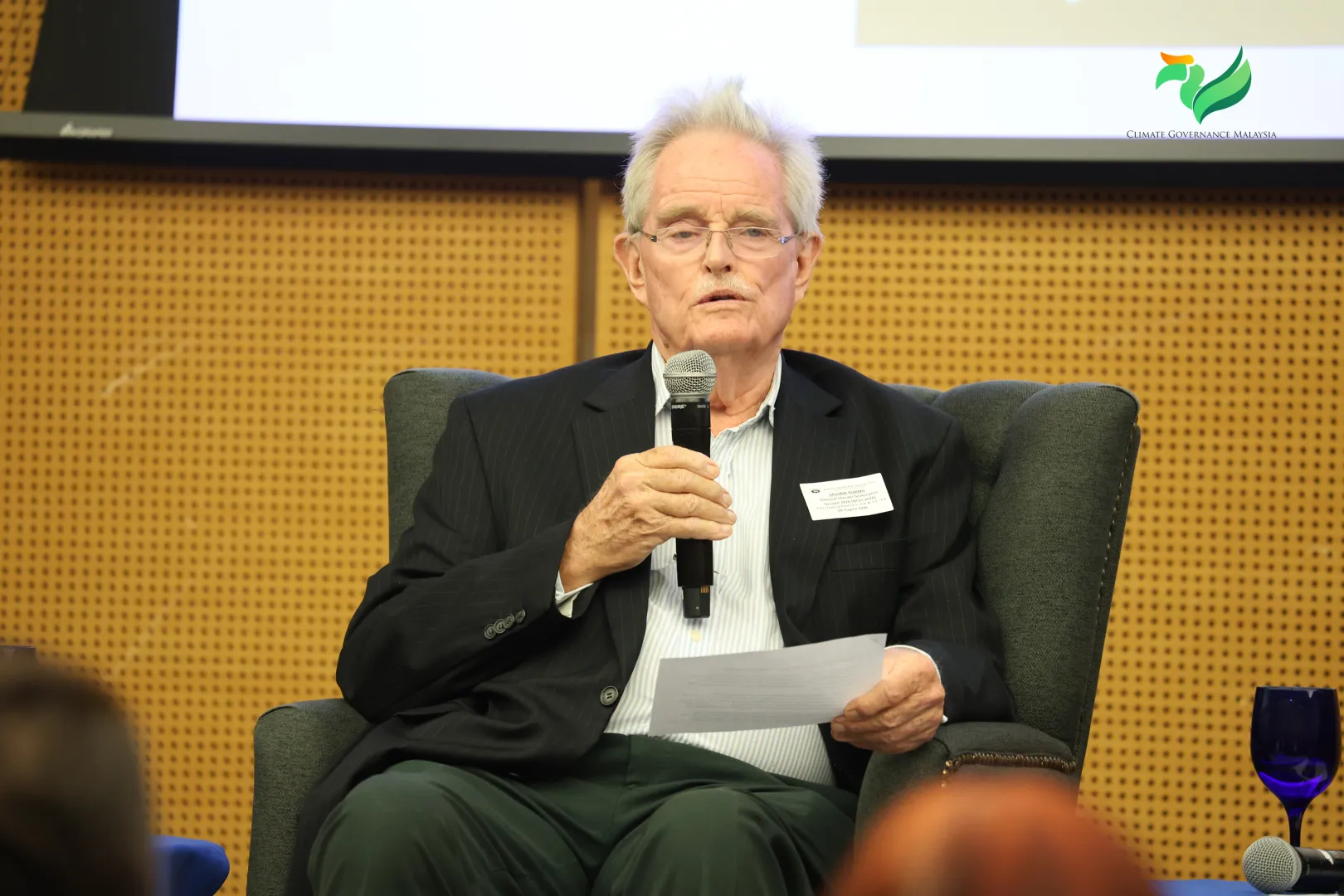
Its National Climate Governance Summit has also developed into a platform bringing together policymakers, industry leaders, experts and practitioners around the governance and practical dimensions of climate action. In 2026, its fourth edition brought together more than 3,000 attendees and 100 speakers across five days of plenaries, workshops and masterclasses.
In 2026, CGM also recognised Dato’ Henry’s contribution to climate governance and environmental conservation at its National Climate Governance Summit.
His career suggests that governance is not simply about responding to the next challenge. It is about understanding what is changing, bringing people along and making decisions with consequences beyond the present. For businesses navigating a changing climate, the ability to think beyond immediate returns may increasingly define the quality of the decisions made today.